
Web design with local SEO in Chicago is about one thing: making sure your neighbors can actually find you. It isn’t just about having a pretty site; it’s about building a structure that maps, local queries, and search engines actually understand. We combine page layouts with specific location signals so that when someone in your area searches for what you do, your business is the one that shows up.

Local SEO isn’t just a “plugin” you add later. It changes how we structure your pages from the very first day.
In our experience, most sites fail because they try to “bolt on” SEO after the design is already finished. That’s a mistake. When you bake location signals into the site’s architecture, your pages index faster and hit local intent much harder. Think of it this way: a shop in Wicker Park needs a completely different internal linking strategy than a corporate office in The Loop if they want to capture that specific neighborhood traffic.

Let’s be honest: Chicago search results are hyper-competitive. Search engines are looking for specific clues to decide who wins that “near me” search.
The bottom line is that a basic address in the footer isn’t enough anymore. You need localized headers, map connections, and neighborhood references that prove you have a physical pulse in areas like Lincoln Park, Bucktown, or River North
Geo-targeted design is simply matching your website to the way Chicagoans actually search. We treat geography as a core feature of the layout.

| Feature | Local Map Pack Impact | Organic Search Impact |
|---|---|---|
| Google Business Profile | Very High | Low |
| On-page Local Content | Medium | Very High |
| NAP Consistency | High | Medium |
| Local Business Schema | Medium | High |
Think of your website as the “source of truth” for your map visibility.
When your site confirms the exact details used in your local listings, you build massive trust with search algorithms. Google’s own documentation makes it clear: accurate website signals are a primary factor in helping your listing appear. If your site and your Google Business Profile aren’t saying the same thing, you’re losing leads.
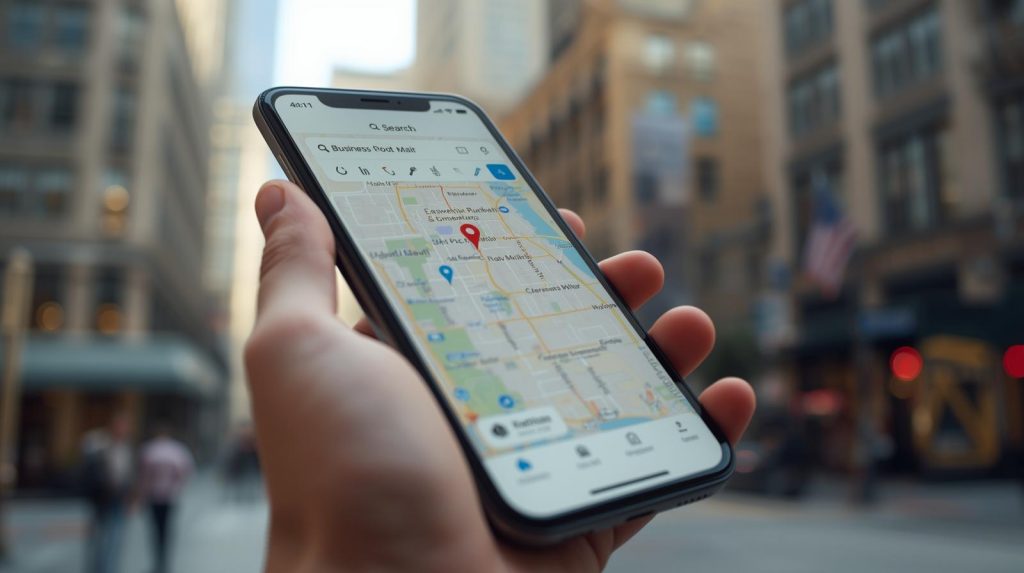
Ignoring local signals early on is a recipe for an expensive rebuild later.
“Ignoring local SEO in your web design isn’t just a minor oversight — it’s a missed opportunity.
A site that doesn’t bake in location signals will struggle in organic rankings, fail to convert Map Pack traffic, and often need expensive redesigns later.”— Keyvelopers Team
The bottom line is that a locally structured website is the foundation for everything else. Without it, your ads and your backlinks are just spinning their wheels. We find this works best when paired with a solid small business web design in Chicago and reinforced through a dedicated local SEO service framework.
Usually, you’ll see the first shifts in a few weeks. But for competitive neighborhoods? Expect two to three months for the rankings to really stabilize.
It’s all about the “Two-Click Rule.” A high-quality site lets a user in Logan Square find exactly what they need in two clicks or less.
Plain and simple: your map listing is optimized, but your website is weak. Search engines treat them as one entity. If the website doesn’t back up the map listing, your organic rankings will stay stuck.